
While this describes my journey and process, I highly recommend the Automate Your Business Processes Module and the Build an Account Reassignment Wizard Module on Trailhead, as I based my work on their tutorial. Thanks Trailhead!
In my case I've modified this from the Trailhead version a bit, because we don't actually want to change who owns the Account, which keeps a record of the Account creator for us, and which I don't want to restrict in the same way as the VAO field. In our company our VP of Sales and Success wants Customer Success Leads to own accounts for the life, but we want anyone who needs to to be able to create an Account.
Because of the above, I needed a different field for "ownership" than the standard Account Owner field and so we created the User Lookup field called VAO that is called in several other workflows. Now that my first user has left the company, I need to be able to reassign her Accounts to the new hire who is coming in, so they can take over the work of the agent who left, and so that the workflows can properly assign future task creation to the new agent.
I'm also trying to think ahead, based on what I've learned so far. Our verticals change frequently as we test new markets and abandon and condense some and grow into or find others. We've also expanded our sales team and shifted who owns verticals. Thus I also know that situation will arise in the future where I want to assign a certain vertical from one user to another although both agents are still active in the company. To try to capture all of these combination we are reassigning the VAO owner based on a combination of the Industry Vertical and Customer Success Agent, since again, only Customer Success Agents can "own" Accounts in our company.
For this process I used a visual workflow, that I've placed in my Administrator App.
The first element I created was the user screen that will eventually be deployed through a tab in my app.
The screen element contains:
- the User who needs Accounts reassigned {!User_to_Unassign},
- the User who is receiving the Accounts {!Recipient_of_the_Vertical}, and
- the Vertical that they are receiving{!Vertical_Affected}
since in my company, we can parse on the basis of verticals. These variable can all be used later in my flow.
I used a couple of prompts as display text, a couple of text fields and a drop-down list later
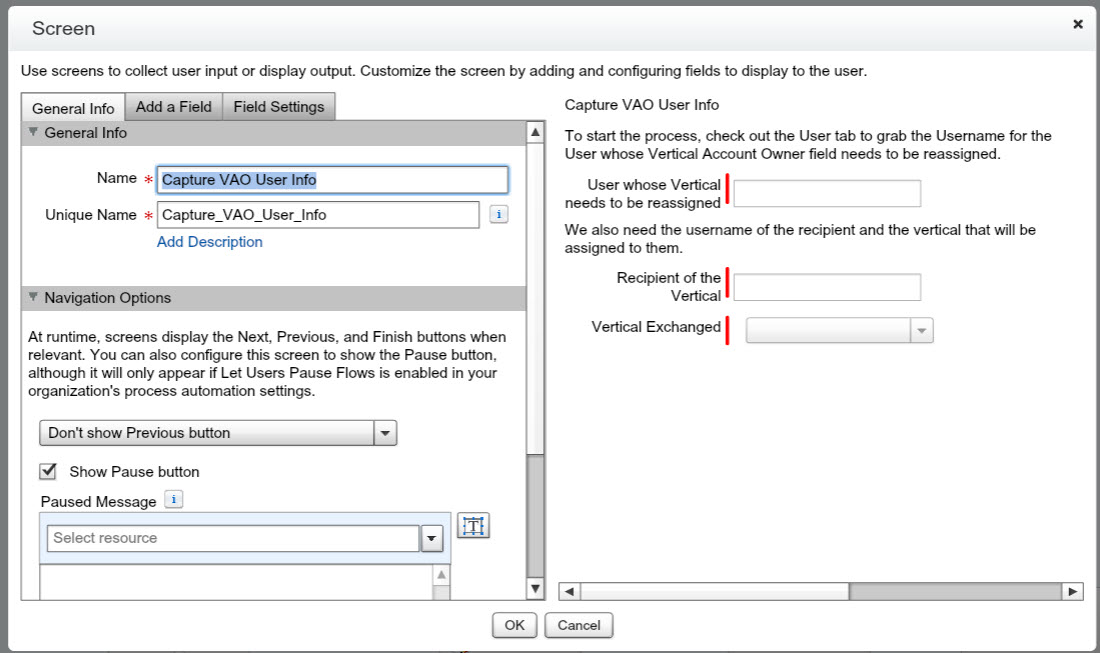
Using the picklist you already created is ideal because you don't have to do any updates to the flow itself. If the list changes, as our vertical list often does, this element will draw from the current list, whatever it may be.
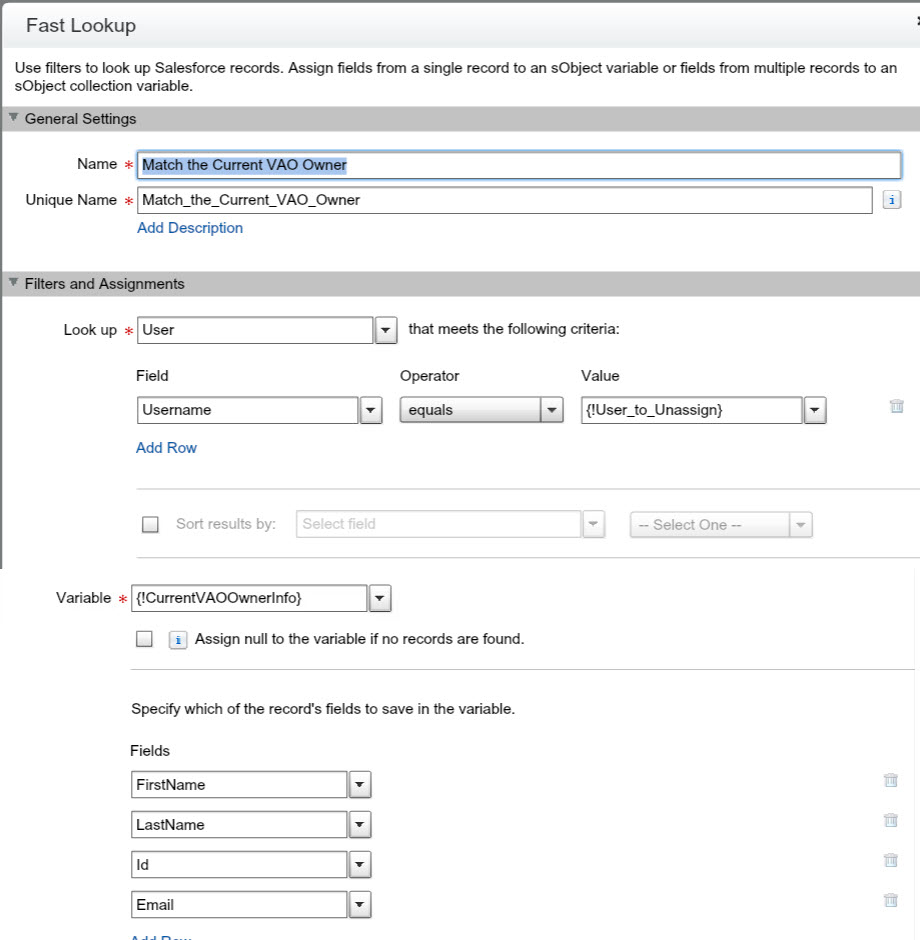
Fast Lookup Element -Match the Usernames to the entries in the screen.
Start with an sObject variable to store Id of the {!User_to_Unassign}. Id is the critical field for me here, but I'm storing a few other variables as well to call in the concluding email. Matching a User's username to the collected {!User_to_Unassign} from the screen, we collect the following variables.
- {!CurrentVAOOwnerInfo.FirstName}
- {!CurrentVAOOwnerInfo.LastName}
- {!CurrentVAOOwnerInfo.email}
- {!CurrentVAOOwnerInfo.id}
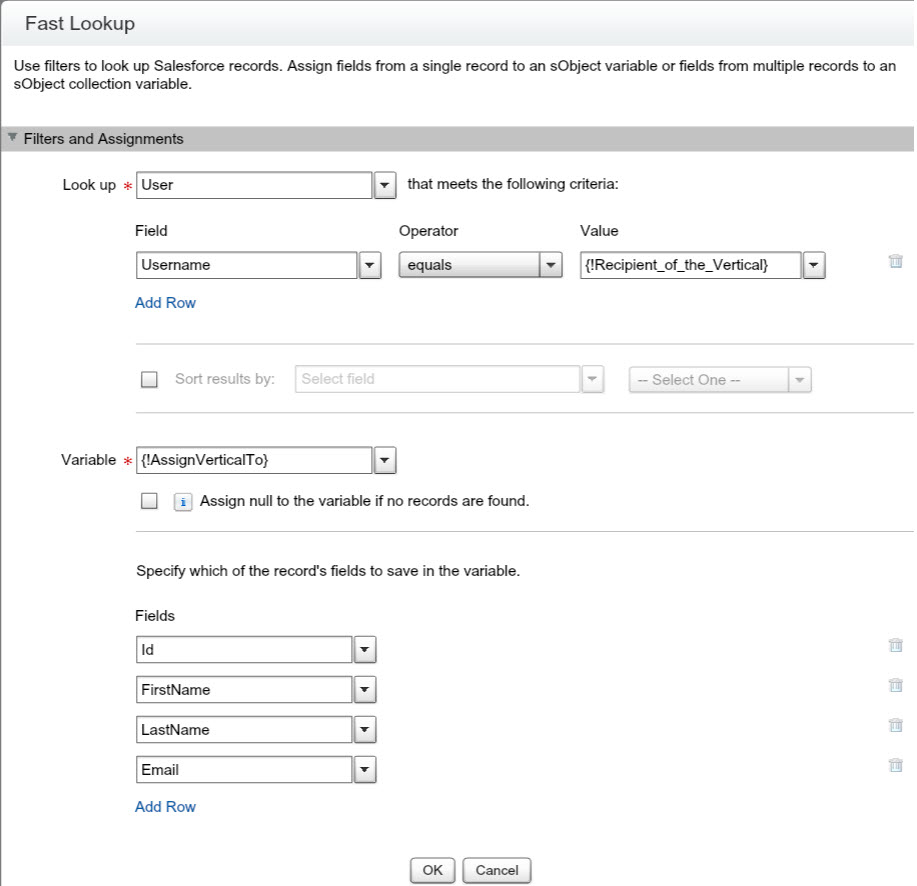
Now I need to do the same for the Assignee. A second sObject variable is created from a second Fast Lookup, where Id is also my main focus. For this flow the {!Recipient_of_the_Vertical} will be matched with a User Id based on the username captured in the {!Recipient_of_the_Vertical}.
- {!AssignVerticalTo.Id}
- {!AssignVerticalTo.FirstName}
- {!AssignVerticalTo.LastName}
- {!AssignVerticalTo.email}
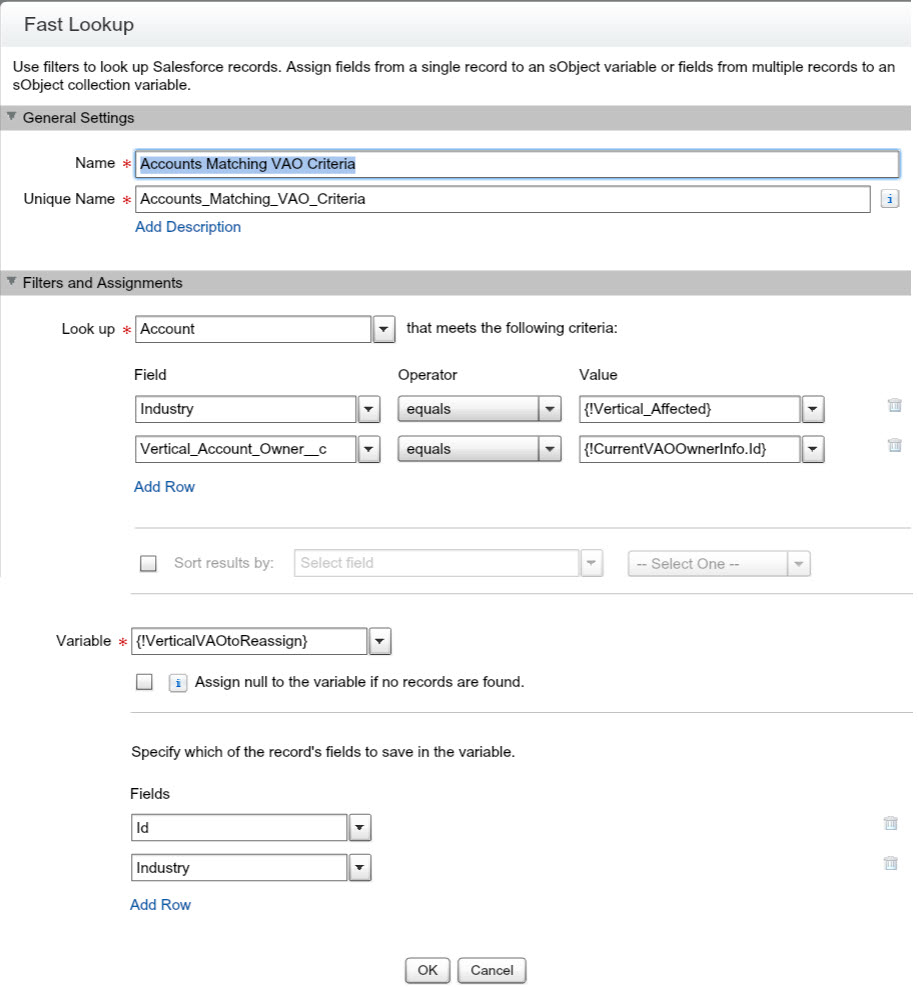
Now we need the sObject collection variable to store matching accounts, the collection variable is needed because we need to look at more than one account in this workflow. I'm using a fast lookup here as well, and looking for accounts that match on both:
- For current Vertical {!Vertical_Affected}
- For current VAO owner {!CurrentVAOOwnerInfo.id}
Based on Accounts that match these criterion, we are storing the Id.
- {!AccountstoReassign.Id}
Add a loop to iterate through all the Accounts to see which ones match my criterion.
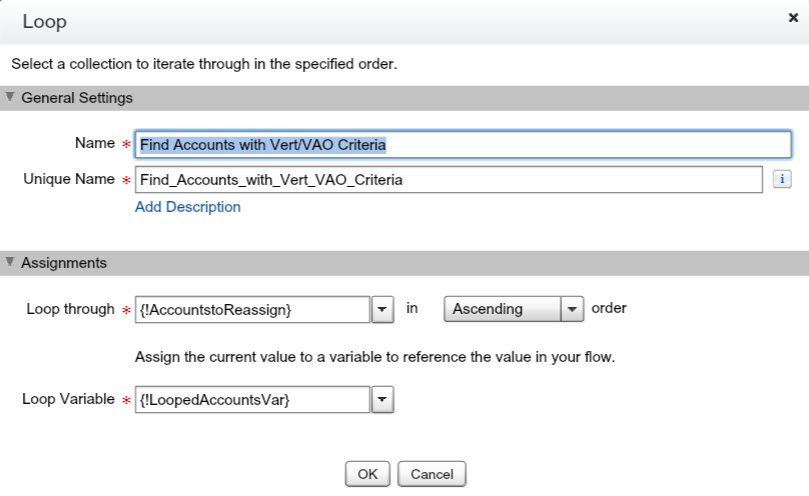
The Assignments
The loop will assign each one of the qualifying accounts to a loop variable and in turn this will be used to Assign the the Loop Variable VAO to {!AssignVerticalTo.Id}
Think of this element as being the "who the loop should assign to", don't worry about how it learns how to do that.
*remember to use Id fields and not usernames!
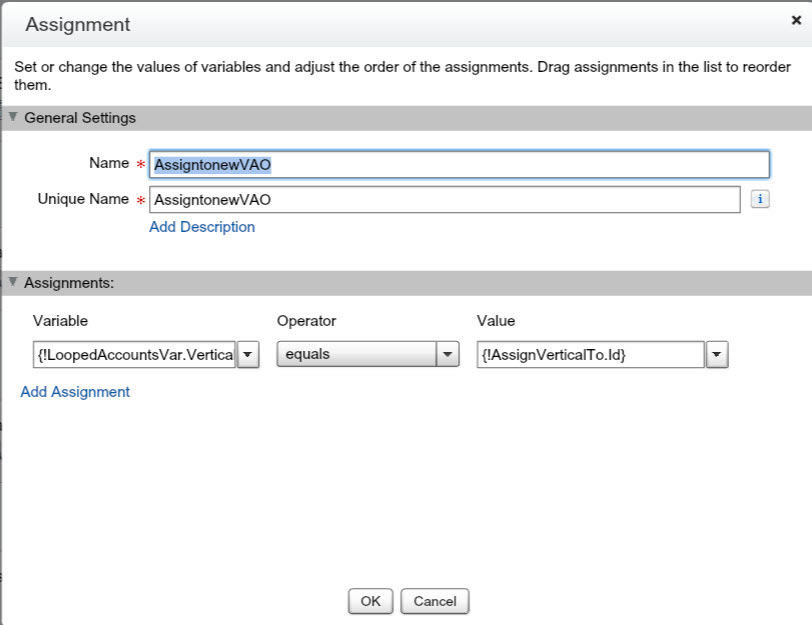
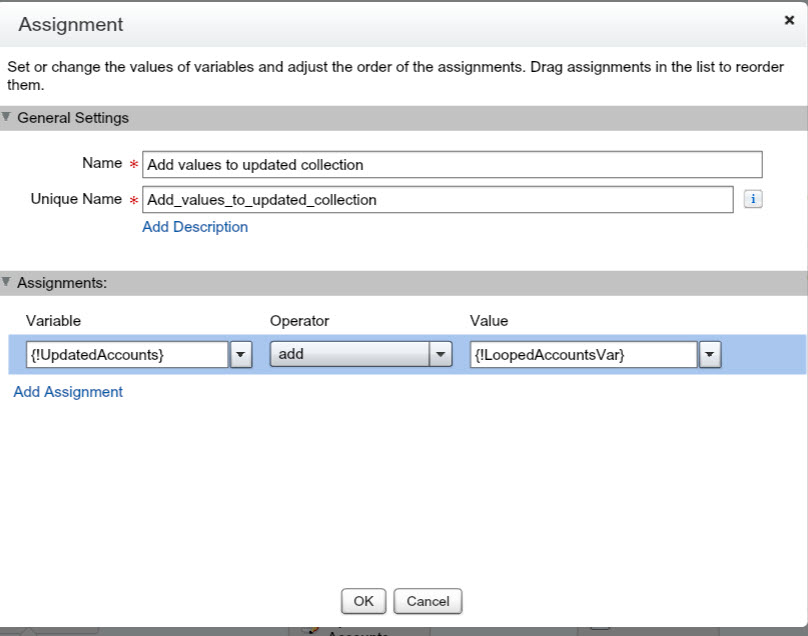
Collection:
Because the loop can only iterate through one element at a time and new collection variable needs to be created so that the newly assigned user accounts can be stored for update. The new collection variable {!UpdatedAccounts} will collect all the iterations (add) of the {!LoopedAccountsVar}.
Once that's done, we are ready to actually update the records.
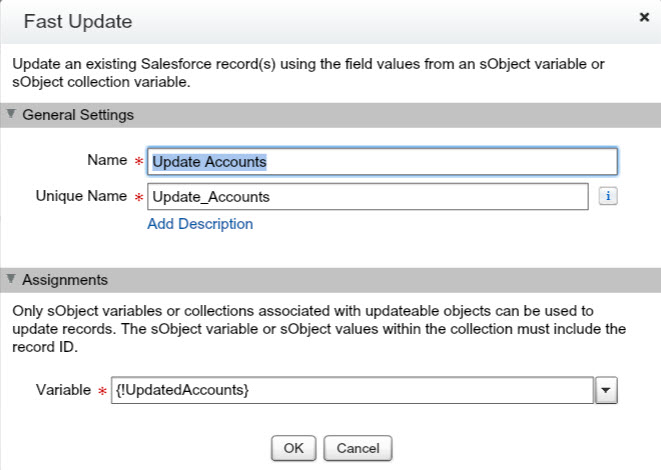
Fast Update
The fast update allows you to use all the accounts that were updated, along with their new VAO based on the collection variable defined in the Collection assignment {!UpdatedAccounts}
Especially if you are using a user flow, don't forget your concluding screen, and email.
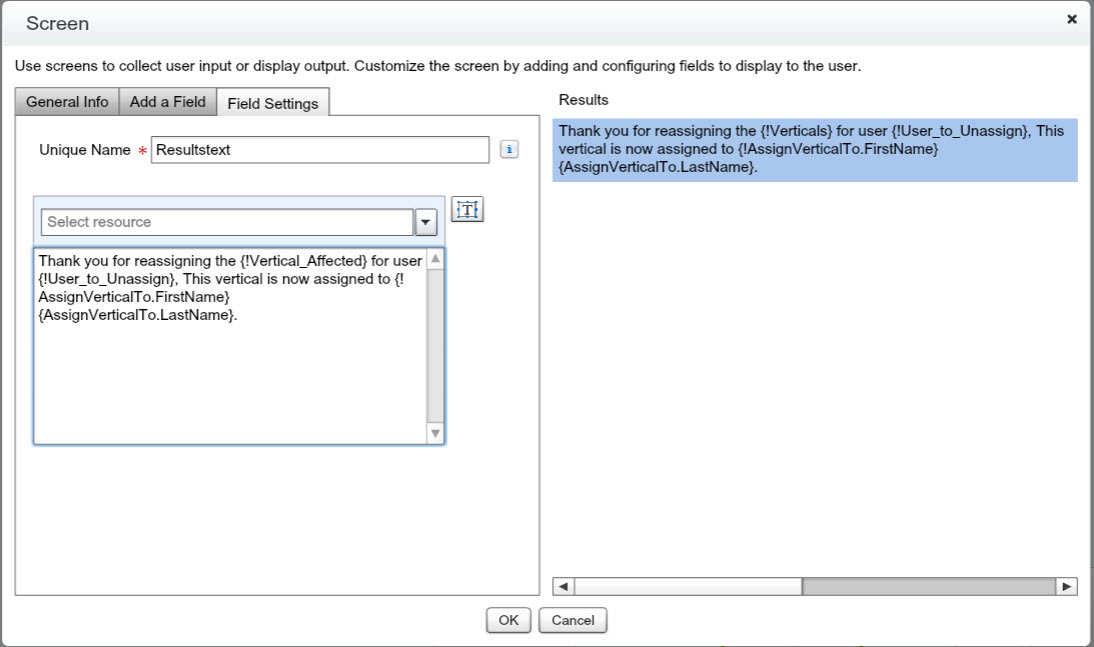
The email uses a text template that I created with the following text:
Hello {!AssignVerticalTo.FirstName} {!AssignVerticalTo.LastName},
This is to let you know that the {!Vertical_Affected} has been assigned to you. You are now the VAO for this vertical and will receive the assignments and tasks associated to these users moving forward.
Please let us know if you have any questions.
Using the variable for that template:{!NotifyUsersofVAOreassign}
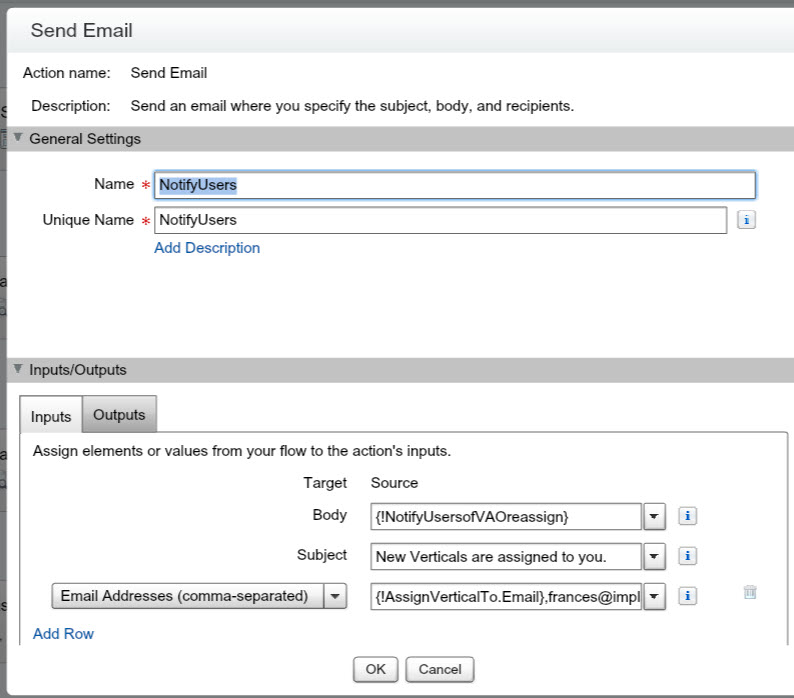
Implementing the flow via a Visual Force tab.
Finally we need a way to be able to deliver it. I have it embedded in an app that has common admin functions and custom apps.
Adding the Visual Force page is easy. You simply find the Visual Force pages under the Developer section (Classic) and create a new page.
The apex is:
<apex:page>
<flow:interview name="unique name from the flow page"/>
<apex:page/>
To create the Tab, type in Tabs.
Find the Visual Force tabs sections and follow the wizard!
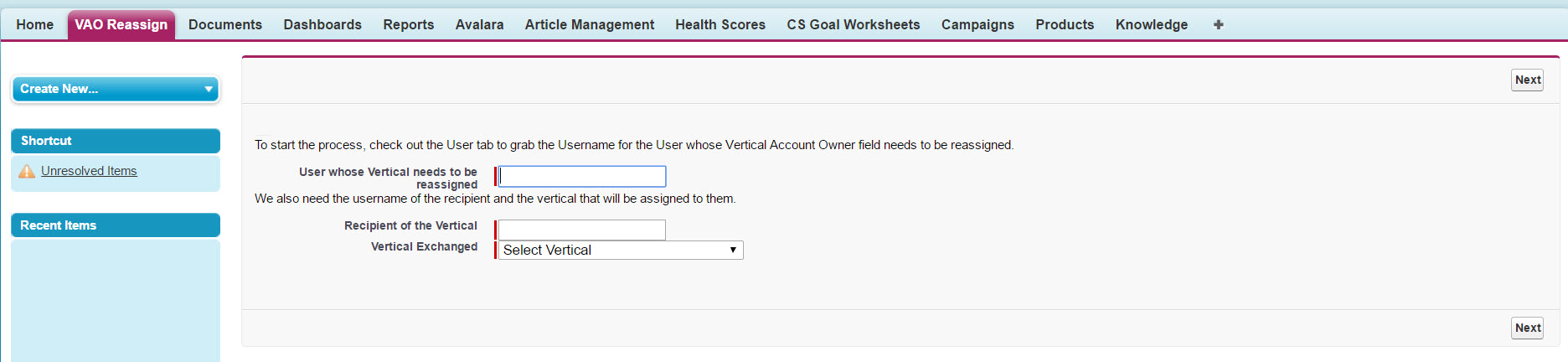
We are ready for being able change vertical owners when these change or add or remove users from the account ownership.
